Best PSU for gaming in 2024

Share this article...

WePC is reader-supported. When you buy through links on our site, we may earn an affiliate commission. Prices subject to change. Learn more

If people consider the CPU to be the brain of the PC then it’s fair to assume the power supply is the heart! Having adequate power to support your rig is a must-have and everyone wants to find the best PSU for gaming. We’ve got a pretty good selection of the best power supplies for you here, so keep reading and find the perfect PSU for your needs.
Today’s best PSU deals
- Corsair RM1000e (2023) – Save 22% now!
- Corsair SHIFT RM850x PSU – Save 10% NOW!
- Corsair RM850x (2021) Fully Modular ATX Power Supply – SAVE 10% NOW!
- ROG Thor 1200W Platinum II (1200 Watt, Fully Modular Power Supply – SAVE 13% NOW!
- ASUS ROG STRIX 1000W Gold PSU – Save 23% NOW!
- Thermaltake Toughpower PF1 ARGB 850W – Save 15% NOW!
- SilverStone Technology ST1200-PT 80 Plus Platinum 1200W PSU – Save 23% NOW!
- MSI MPG A1000G PCIE 5 & ATX 3.0 Gaming Power Supply – SAVE 25% NOW
- Thermaltake Toughpower GF A3 1200W – Save $20
- Thermaltake Toughpower GF A3 1050W – Save $20
Ultimately, what PSU you select here depends on your power consumption requirements and budget. We’ll go over the recommendations first before providing the tools and information you need to make the best choice when building a gaming PC so that by the end you should be able to leave with the best PSU for your build.
Best PSU for gaming in 2024: our top picks
If people consider the CPU to be the brain of the PC then it’s fair to assume the power supply is the heart! Having adequate power to support your rig is a must-have and everyone wants to find the best PSU for gaming. We’ve got a pretty good selection of the best power supplies for you here, so keep reading and find the perfect PSU for your needs.
Ultimately, what PSU you select here depends on your power consumption requirements and budget. We’ll go over the recommendations first before providing the tools and information you need to make the best choice when building a gaming PC so that by the end you should be able to leave with the best PSU for your build.
Best PSUs for gaming in 2024

Seasonic Prime ATX 3.0 TX-1300
Wattage
1300W
Certication
80+ Titanium
Modularity
Fully
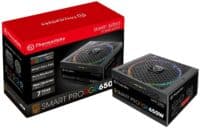
Thermaltake Smart Pro RGB 650W
Wattage
650W
Certification
80+ Bronze
Modular?
Fully
Seasonic FOCUS SGX-500
Wattage
500W
Certification
80+ Gold
Modular?
Fully
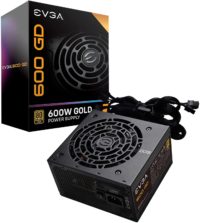
EVGA 600 GD
Wattage
600W
Efficiency
80+ Gold
Modularity
non-modular
Best PSU for gaming in 2024
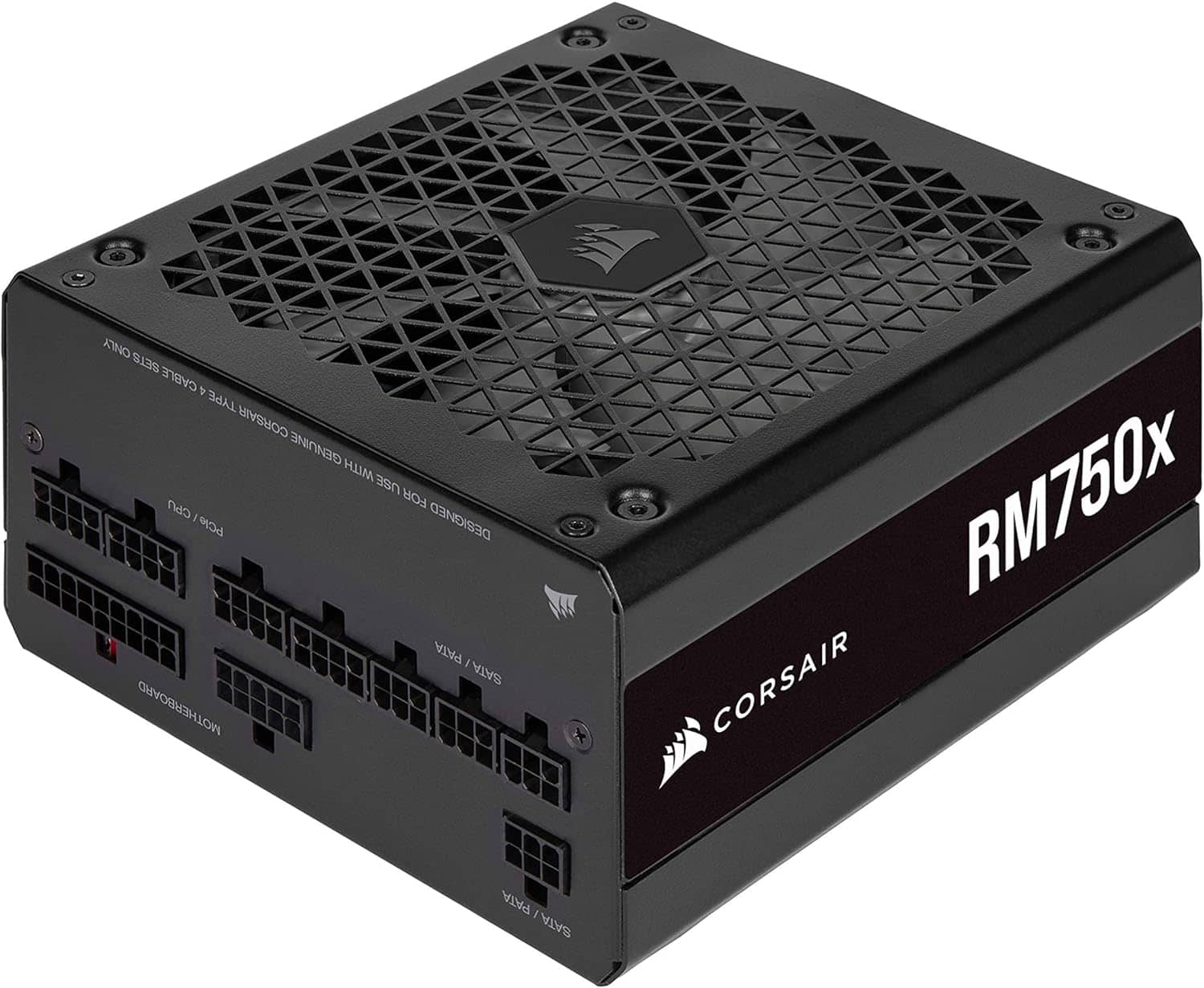
Corsair RM750x
Wattage
750W
Certification
80+ Gold
Modular?
Fully
- Very quiet while under load
- Excellent build quality
- Fully modular
- Smaller than predecessor
- 10-year warranty
- Short distance between peripheral connectors
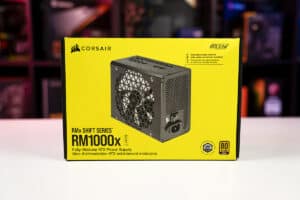
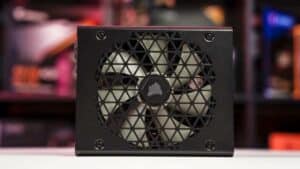
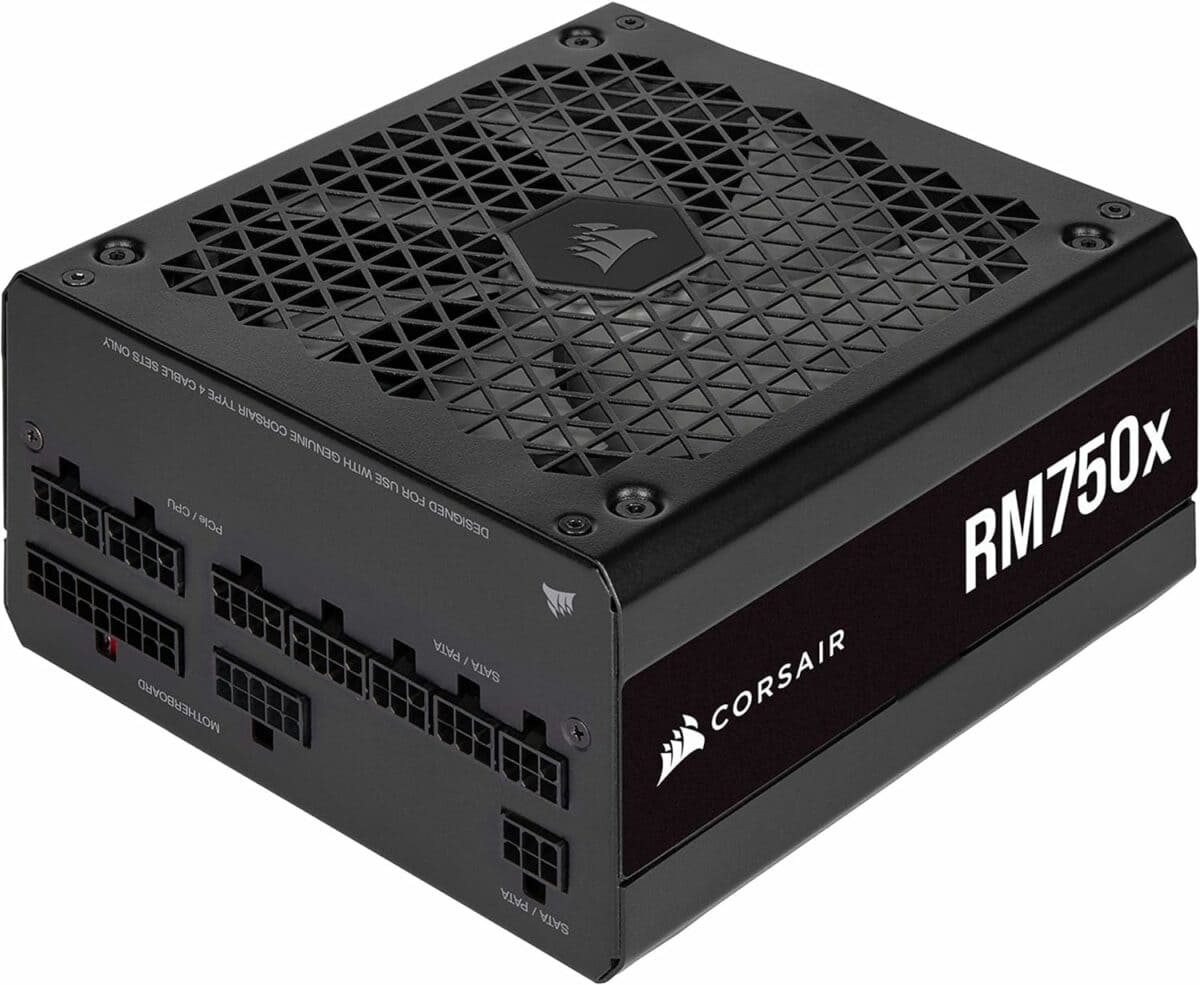
Our selection for the best PSU for gaming is from Corsairs’ highly regarded RMX-series, the RM750x PSU. This version comes with a few improvements on its previous iteration, which include a more compact form factor and a quieter fan profile.
The Corsair RM750x, as you can probably tell, is a 750W version and comes with more than enough power for high-end builds. This PSU achieves 80+ Gold and ETA-A efficiency, with Cybenetics also rating this as LAMBDA-A+certification. The RM750x sports a max noise output of around 15 dBa, making it a viable PSU for silent focused builds, as long as you work out the correct power ratio and take advantage of the Zero RPM fan mode.
The RM750x PSU is fully modular and comes with two EPS connectors and four PCIe connectors. Full-modularity isn’t a massive selling point but it can make the overall building process a bit easier and stops you from having to cable manage unused cables that you can often get with non-modular.
Regardless of whether you want extra power for a silent gaming PC or adequate power for a top of the line gaming rig, the Corsair RM750x should see you through.
Most efficient PSU
Seasonic Prime ATX 3.0 TX-1300
Wattage
1300W
Certication
80+ Titanium
Modularity
Fully
- Incredible efficiency in conversion
- ATX 3.0 standard for the latest graphics cards
- 12 Years warranty for peace of mind
- Features plenty of connectors and power for any setup
- Ludicrously expensive
While the Seasonic PRIME TX-series offers some of the best power supplies on the market, their hefty price and large wattage make them less ideal for hardcore games, meaning this misses out on the top spot but is easily one of the best high-end PSUs out there.
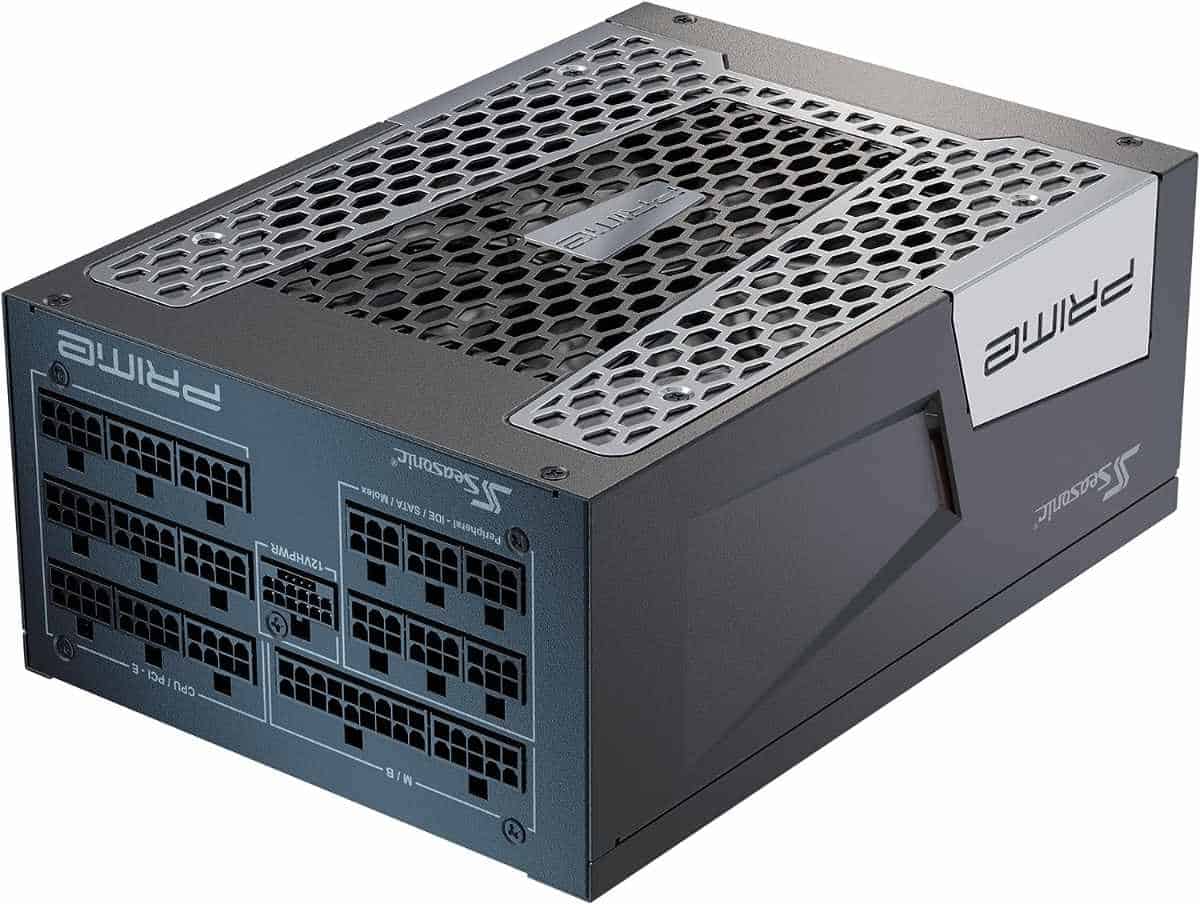
This Seasonic Prime ATX 3.0 TX-1300 PSU features a 1300W capacity and is going to be overkill for most high-end systems. That being said, for those that require 800+ wattage, this makes a lot of sense thanks to its incredible Titanium level efficiency, low temperatures at full power, and near-silent operation. The Prime TX ATX 3.0 features just 1300 and 1600W models which have achieved A noise levels and Titanium efficiency from Cybenetics as well. What is most impressive about this PSU is its silent operation, with it managing under 20 dBa overall. It owes this silent operation to its sheer efficiency which is backed up by the hybrid fan control.
This TX-1300 is fully modular, limiting clutter in your case and generally making your life a bit easier when it comes to powering your system. Included, we see three EPS connectors for higher-powered systems, two SATA 3.3 supporting connectors, along with 6 PCIe connectors. Unless you have the most power-hungry gaming PC out there, many won’t go wrong with the Seasonic PRIME TX-1300, a powerful and efficient masterclass in PSUs.
Best PSU with RGB
Thermaltake Smart Pro RGB 650W
Wattage
650W
Certification
80+ Bronze
Modular?
Fully
- Reliable and efficient PSU
- Fully Modular
- RGB fan with semi-passive operation
- 7-year warranty
- Aggressive fan profile
- Single EPS connector
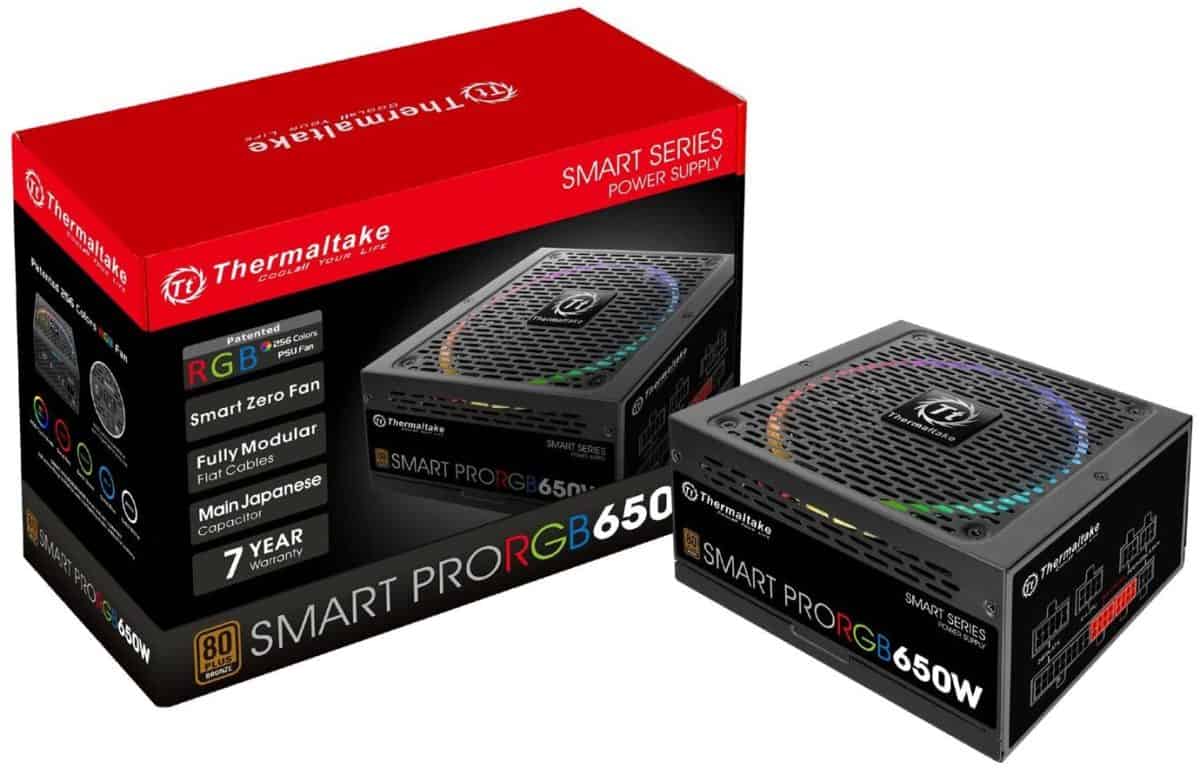
The Thermaltake Smart Pro RGB 650W PSU is one of the best in its class when it comes to additional custom lighting. Alongside the impressive aesthetics, you are still getting a reliable power supply that can adequately manage power for mid to high-end gaming PCs.
The Thermaltake Smart Pro PSU here would be great for any mid-range build thanks to its 650W capacity. This will probably be more wattage than needed for most in the mid-range category but it does give you a bit of headroom should you choose to upgrade later down the line. This model features 80+ Bronze certification, so isn’t as efficient as the more premium options above but it still holds up as a well-priced alternative. This PSU achieves ETA-S efficiency and LAMBDA-S+ noise levels according to Cybenetics. The RGB fan with this PSU isn’t just a pretty face, it also comes with zero RPM fan options, helping you keep those noise levels down as much as possible.
With quality capacitors, different lighting options, and more than adequate efficiency levels, you are getting a high-quality PSU for a very affordable price. This RGB PSU is the perfect way to add a bit of flair to your next budget build, with plenty of headroom for future upgrades down the line.
Best SFF PSU
Seasonic FOCUS SGX-500
Wattage
500W
Certification
80+ Gold
Modular?
Fully
- Excellent build quality
- Reliable PSU with high performance
- Fully modular
- 10-year warranty
- Fan is quite loud when under high load
For a more compact PSU, this SFF PSU from Seasonic offers great performance at a fair price. Alongside the high-level build quality we have come to expect from Seasonic power supplies, the SGX-500 features full modularity and an impressive 10-year warranty.
This particular model comes with a 500W capacity but Seasonic also has a 650W option for those looking to build a more powerful SFF gaming PC. This Focus SGX power supply comes with an 80+ Gold certification for efficiency and even under a tough load, this will stay below 40 degrees. What is most impressive about this compact PSU is its ability to perform highly while simultaneously outputting low noise levels that are rated as LAMBDA-S++ on Cybenetics.
The cables that come with the Seasonic Focus SGX-500 are short but this is common practice for SFX and SFX-L power supplies. This comes with an EPS connector and everything else you are going to need but it would have been nice for Seasonic to provide an extra SATA cable.
You are getting a compact PSU that is highly reliable and should support your mini system to no end. When it comes to power supplies, Seasonic is often a recommended brand, and this fully modular option is going to be the perfect fit.
Best budget PSU
EVGA 600 GD
Wattage
600W
Efficiency
80+ Gold
Modularity
non-modular
- Still has a Gold efficiency rating for lower end options
- Non-modular design limits your management and components
Our budget option is the EVGA 600 GD, bringing a gold efficiency to the 600W wattage. Although you do lose out on any sort of modularity, limiting your components options to what cables are provided. Although with a 600W rating, it is already limited to how much you can add in.
It is still a reputable brand and model that offers you a good source of power for your build. With a standard ATX cable, one EPS, two PCIe, six SATA, three peripherals, and one floppy connector it still provides the basics for your entry-level build.
How we choose
All of the power supplies on this list have been hand-selected for a reason. First and foremost, we conducted a search to discover which PSUs gamers tend to prefer while trying to balance those with the highest reviews against those with the lowest price tags.
Reviews from various manufacturers were taken into account, as well as reviews from others in the PC gaming industry.
Next, we get our hands on as many of our recommendations as possible so we can see the build quality up close and test how easy they are to install.
Things to consider
Finding the best PSU for gaming can be a bit painful at times, there are so many options to choose from that it can become a bit of a headache. What wattage should you go for? What’s the deal with efficiency? Oh, and we haven’t even discussed modularity! Don’t worry, this section is going to break down the things you need to know in an easy-to-understand manner, ensuring you walk away with the best product for your PC.
Let’s take a look.
Reliability
Quality is hugely important, no matter the budget or consumer needs.
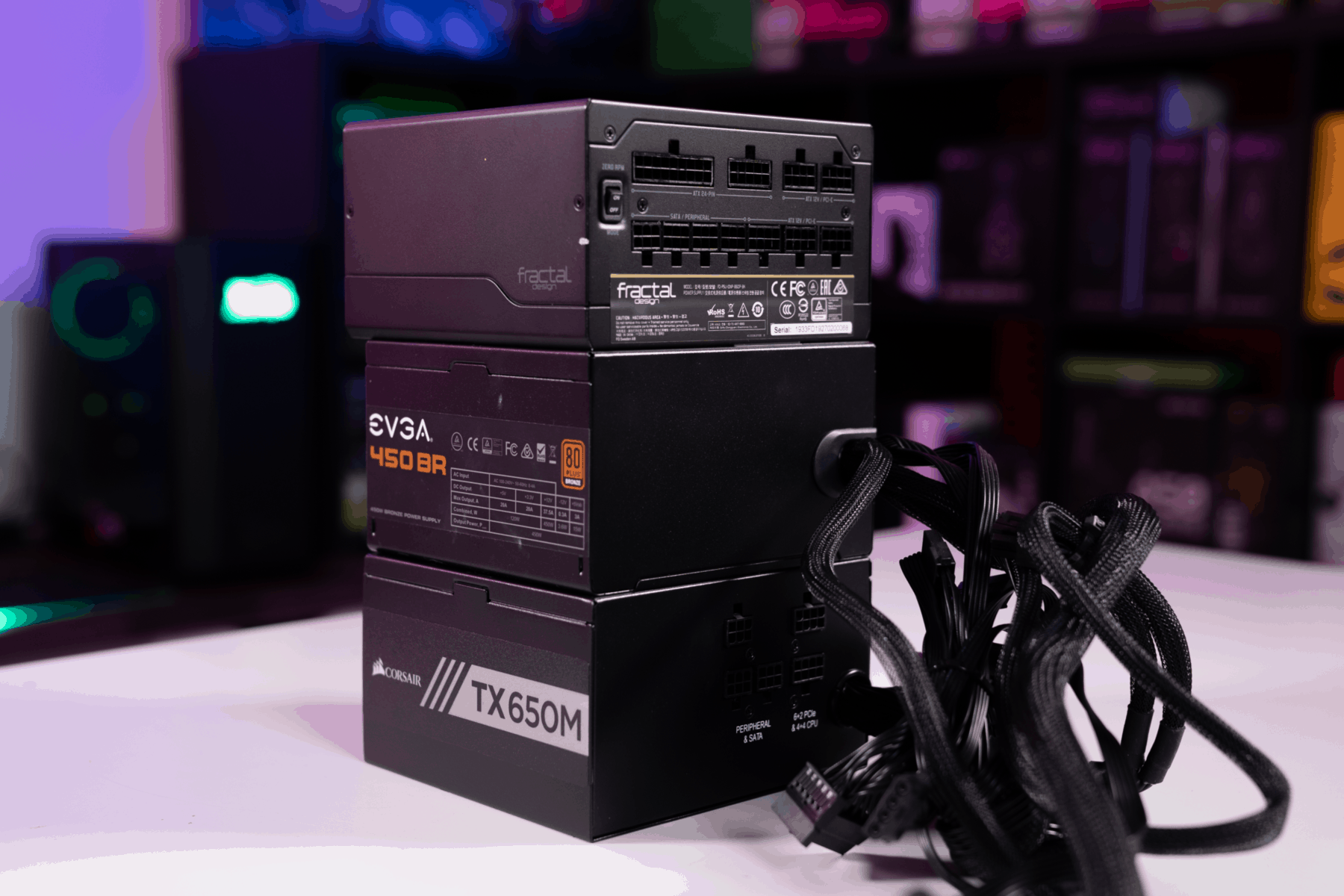
This is because the primary purpose of a PSU is supplying your expensive components with precious power. Bad quality power supplies can feature poor efficiency and produce excessive noise due to anything from coils vibrating to a poorly constructed fan. Cheaper power supplies can also be manufactured with thinner metal housing, which allows passing vibrations to be sent to the PC case. Always go for reliable, well-built power supplies, with beefy warranties!
With this in mind, the selections in this article all represent trustworthy manufacturers in the PSU world that offer quality products, power efficiency, and decent warranties.
Passive vs. semi-passive PSU
Power supplies are generally very efficient these days, but they aren’t perfect and can still produce some heat. A passive PSU (also known as a fanless PSU) cools by using massive heatsinks and superb efficiency. With no moving parts, a fanless PSU gives you true silent operation and should be considered for low power builds.
Semi-passive power supplies (or hybrid PSUs as they are commonly known) use fan profiles / zero fan mode to act only when needed. This means that the PSU fan will run at idle until a certain percentage of the load has been hit, at which point the fan begins to spin. The percentage varies across different models but in many cases, the PSU will remain silent until it gets to around 40% load.
Efficiency rating and meaning
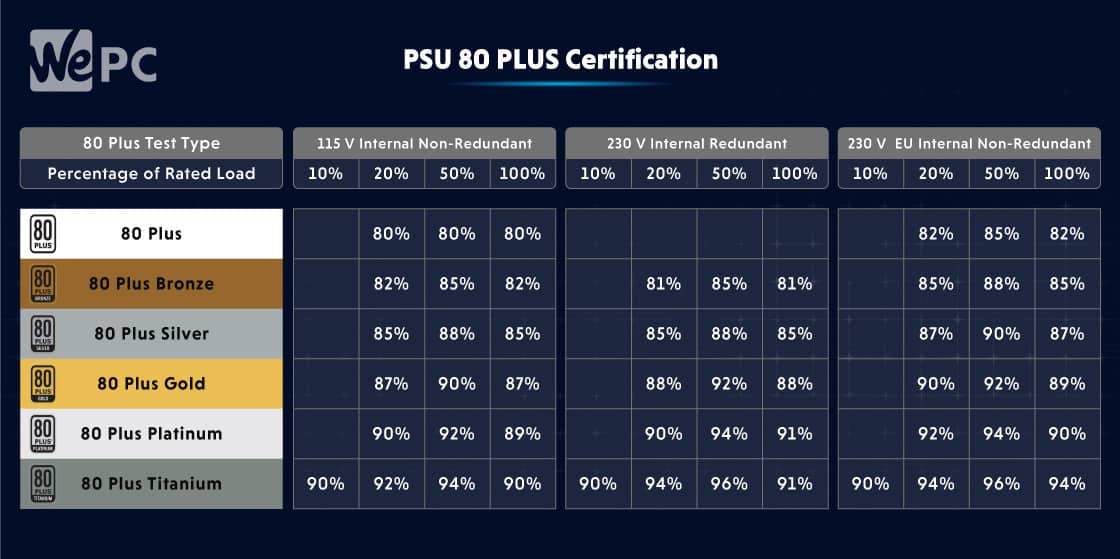
Efficiency rating determines how effective your PSU is at managing power. The higher the efficiency, the less power consumed and the less excess heat generated.
Wattage
It is always a good idea to work out the overall wattage of the gaming PC you are going to build.
Using our PSU Calculator, you should understand what your power needs are pretty quickly. If you find that the PSU you would like only just meets those power needs, we recommend buying one with a higher wattage to make sure there is no bottlenecking and you have something for future upgrades.
What many people find, however, is that PSU wattage needs for their system are lower than what they think. Run this tool before making a purchase!
PSU Modularity
Modularity primarily affects the building process and airflow. In short, it has no bearing on your PC gaming experience when you aren’t tampering with your PC.
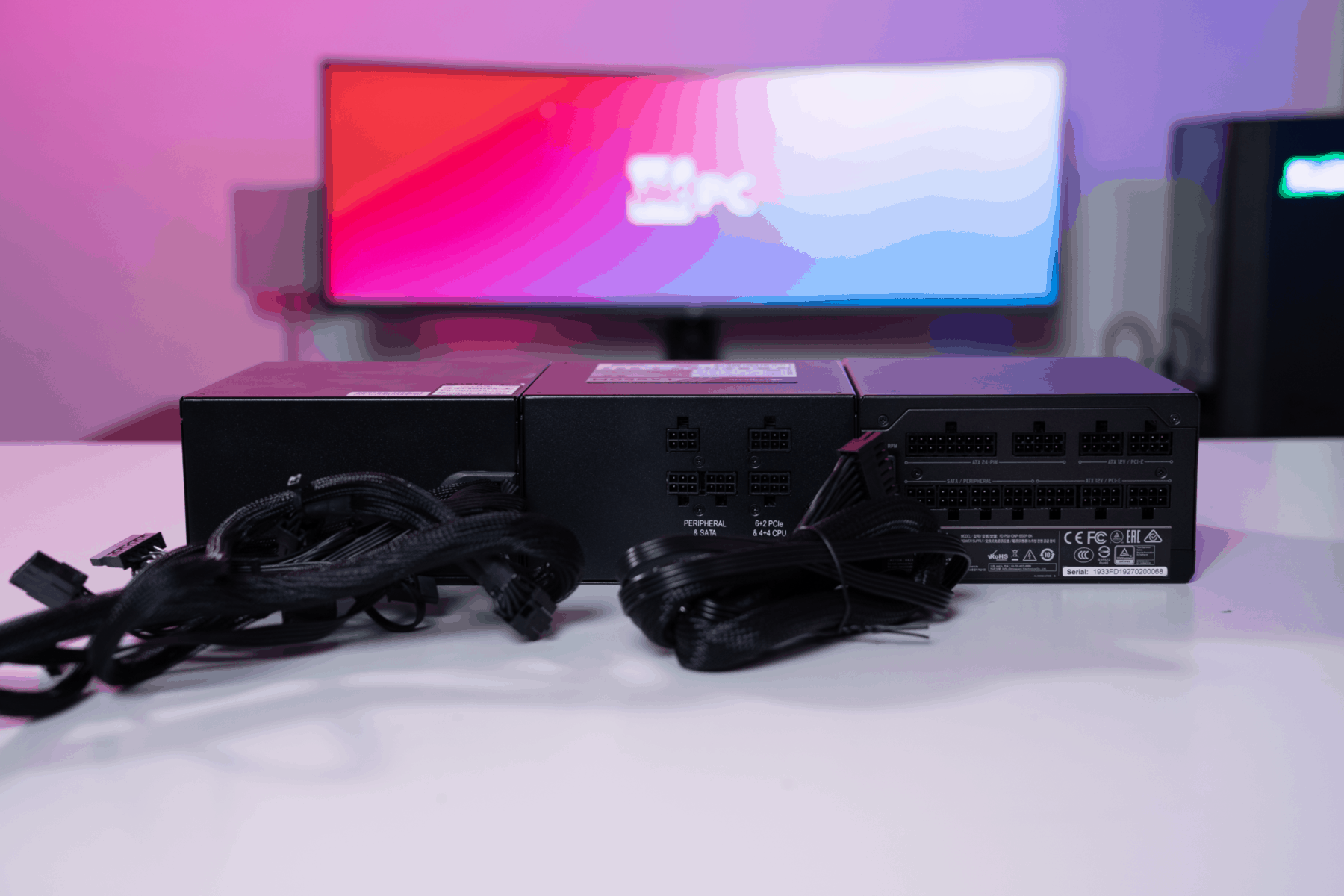
Semi and Full Modular systems are significantly more convenient. As mentioned it also improves airflow and this is down to not have several cables you are not using clogging up the empty space inside the case. We highly recommend that you opt for a Semi or Full-Modular PSU regardless of your budget.
Related PSU Pages
Looking for some extra info? Check out our guides to Power Supplies right below.
- Power Supply Ratings: What are they?
- Best UPS
- Best PSU For RTX 30-series GPUs
- Full vs Semi vs None modular: What does it mean?
- PSU Hierarchy List
- Silent PSUs
Best PSU for gaming FAQs
What is the best PSU for gaming?
For the best PSU, we have chosen the Corsair RM750x. Which is a robust and great choice of supply. With good efficiency and power rating, it is a popular choice, and for good reason. Whilst for more efficiency, the Seasonic Prime is a good choice. It might set you back initially, but it can save you in the long run. Whilst for budget options, the Thermaltake Smart Pro is always a good alternative.
Which power supply is most reliable?
There are plenty of reliable PSUs to choose from, as long as it’s from a reputable vendor and not the cheapest option from Alibaba that might explode. But in particular, some of the most favorable power supply manufacturers are Corsair, EVGA, and Seasonic.
Final Word
Finding the best PSU for gaming doesn’t have to be a choir, in fact, once you know what you are looking for the PSU is a rather easy component to save yourself some money. When purchasing, remember for low to mid-range systems, you can select any PSU from our list of recommendations and game contently. For higher-end builds ensure you select one with sufficient wattage and connectors to support your CPU and GPU.